
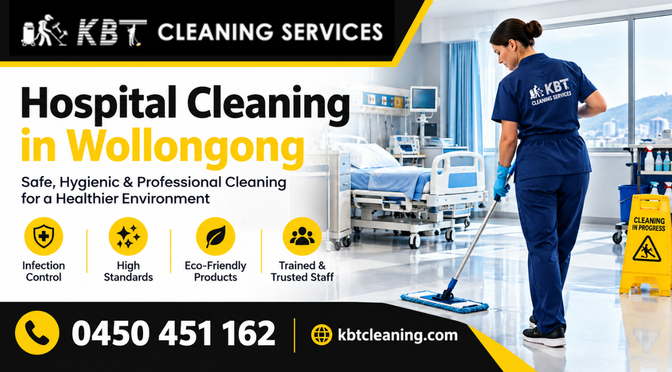
Hospital cleaning goes far beyond regular tidying. It’s a critical part of infection prevention and patient safety. Hospital cleaning in Wollongong requires strict adherence to health and safety standards. Proper disinfection protocols prevent the spread of harmful bacteria and viruses.
What Is Hospital Cleaning Compliance?
Hospital cleaning compliance means following strict guidelines. These rules protect patients, staff, and visitors from infections. Commercial cleaning in Wollongong services must understand these regulations completely.
Standards cover microbiological testing, chemical use, and equipment sterilisation. Healthcare facilities must meet all government health department requirements. Regular audits ensure compliance with national safety standards.
High-Risk Area Cleaning Standards
High-risk areas demand extra attention and care. These include operating theatres, intensive care units, and isolation wards. Local commercial cleaners in Wollongong need specialised training for these spaces.
Key requirements for high-risk areas include:
- Using approved hospital-grade disinfectants only
- Following contact time recommendations carefully
- Wearing proper personal protective equipment consistently
- Documenting all cleaning activities accurately
- Performing environmental monitoring regularly
Staff must clean surfaces twice daily or more. All equipment requires decontamination before and after patient contact.
Terminal Cleaning Essentials
Terminal cleaning happens when patients leave their rooms. This thorough process eliminates all potential contamination sources. A team specialising in commercial cleaning in Wollongong must complete this correctly.
Terminal cleaning includes:
- Removing all visible soiling and blood
- Washing all surfaces with appropriate detergent solutions
- Disinfecting all high-touch surfaces with approved chemicals
- Cleaning medical equipment and furniture thoroughly
- Completing final microbial testing before reoccupancy
The entire process requires four to six hours. Every surface must be included without exception.
Key Compliance Requirements
Healthcare facilities must meet Australian Standards and regulations. Staff need current infection control training and certification. Hospital cleaning in Wollongong requires detailed cleaning schedules and checklists.
Compliance includes:
- Maintaining documented cleaning logs and inspection records
- Using colour-coded equipment to prevent cross-contamination
- Following segregation protocols for waste materials
- Ensuring proper air quality management in sensitive areas
- Conducting regular staff competency assessments
Managers must conduct inspections daily and weekly. All failures must be corrected immediately.
Best Practices for Healthcare Facilities
Local commercial cleaners in Wollongong should implement modern cleaning technologies available today. Staff training programs ensure everyone understands protocols thoroughly. Regular quality assurance reviews maintain high standards consistently.
Invest in:
- Microfibre cloths and modern equipment
- Automated monitoring systems for compliance tracking
- Regular staff development and certification programmes
- Environmental hygiene audits every quarter
- Supplier partnerships for quality products
Communication between teams is essential for success. All staff must understand their specific responsibilities clearly.
Conclusion
Proper hospital cleaning compliance protects lives and prevents outbreaks. Healthcare facilities cannot compromise on cleaning standards ever.
If you need professional assistance with hospital cleaning requirements, contact KBT Cleaning PTY LTD today. Call 0450 451 162 or email kbtcleaning143@gmail.com for expert advice. Visit https://kbtcleaning.com/ for comprehensive cleaning solutions. Let experienced professionals handle your compliance needs effectively.
Frequently Asked Questions
- What is the difference between high-risk and terminal cleaning?
High-risk cleaning occurs regularly in sensitive areas like operating theatres. Terminal cleaning happens when patients leave, requiring deep disinfection. - How often should high-risk areas receive cleaning?
Most high-risk areas need cleaning twice daily minimum. Some operating theatres require cleaning between every procedure. - What disinfectants are approved for hospital environments? Only hospital-grade, TGA-approved disinfectants should be used. Your supplier can provide approved products meeting Australian standards.
- How long does terminal cleaning usually take?
Terminal cleaning typically requires four to six hours. Completion time depends on room size and contamination level. - What training do cleaning staff require?
Staff need infection control certification and specialised hospital cleaning training. Annual refresher courses ensure ongoing compliance and competency. - How is compliance monitored and verified?
Health departments conduct regular audits and inspections. Facilities must maintain detailed documentation of all cleaning activities. - What are high-touch surfaces in hospitals?
High-touch surfaces include door handles, bed rails, and light switches. These require more frequent disinfection than other surfaces. - Can standard cleaning products work in hospitals?
No, standard products are insufficient for healthcare settings. Only approved, hospital-grade disinfectants meet infection control requirements. - What should be included in a compliance checklist?
Checklists should cover cleaning schedules, products used, and staff names. Documentation of contact times and environmental monitoring results is essential. - How do environmental monitoring tests work?
Swab tests collect samples from surfaces for microbiological analysis. Results confirm whether disinfection successfully eliminated harmful microorganisms.


